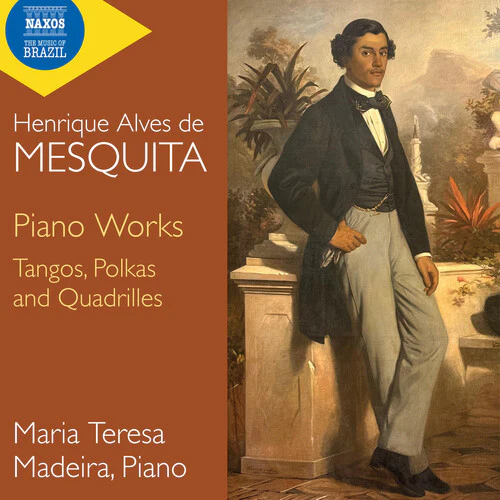
Maria Madeira Teresa - Mesquita: Piano Works
Henrique Alves de Mesquita was a prolific composer who defied Brazilian society's systemic exclusion of Black people to achieve prominence as one of the leading figures in the local musical scene of the 19th century. He was highly regarded for his sacred music and operas, which are rarely heard today. After study years in Paris, Mesquita turned his versatility and sophistication towards fashionable music theatre styles such as polkas, tangos and waltzes, conveying emotions ranging from contagious joy to gentle melancholy. It is these lighter pieces that are now considered by many scholars to be one of the main origins of modern Brazilian popular music.
Henrique Alves de Mesquita was a prolific composer who defied Brazilian society's systemic exclusion of Black people to achieve prominence as one of the leading figures in the local musical scene of the 19th century. He was highly regarded for his sacred music and operas, which are rarely heard today. After study years in Paris, Mesquita turned his versatility and sophistication towards fashionable music theatre styles such as polkas, tangos and waltzes, conveying emotions ranging from contagious joy to gentle melancholy. It is these lighter pieces that are now considered by many scholars to be one of the main origins of modern Brazilian popular music.
Description
Henrique Alves de Mesquita was a prolific composer who defied Brazilian society's systemic exclusion of Black people to achieve prominence as one of the leading figures in the local musical scene of the 19th century. He was highly regarded for his sacred music and operas, which are rarely heard today. After study years in Paris, Mesquita turned his versatility and sophistication towards fashionable music theatre styles such as polkas, tangos and waltzes, conveying emotions ranging from contagious joy to gentle melancholy. It is these lighter pieces that are now considered by many scholars to be one of the main origins of modern Brazilian popular music.